The hospitality of
Engagement.
AYLLU expresses Engagement across Latin American territories. Cities, coastlines, landscapes, architectural heritage and local cultures give each hotel its character.
The system defines a complete institutional architecture in advance: identity, typologies, territorial principles, architectural references, programmes, operations and economic structure.
Hospitality
that participates in local life.
Architecture responds to climate, gastronomy connects with local life and shared spaces naturally welcome encounters.
Each territory has its own materials, uses and rhythms. AYLLU translates this richness into contemporary hospitality whose expressions vary with the city, landscape and building.
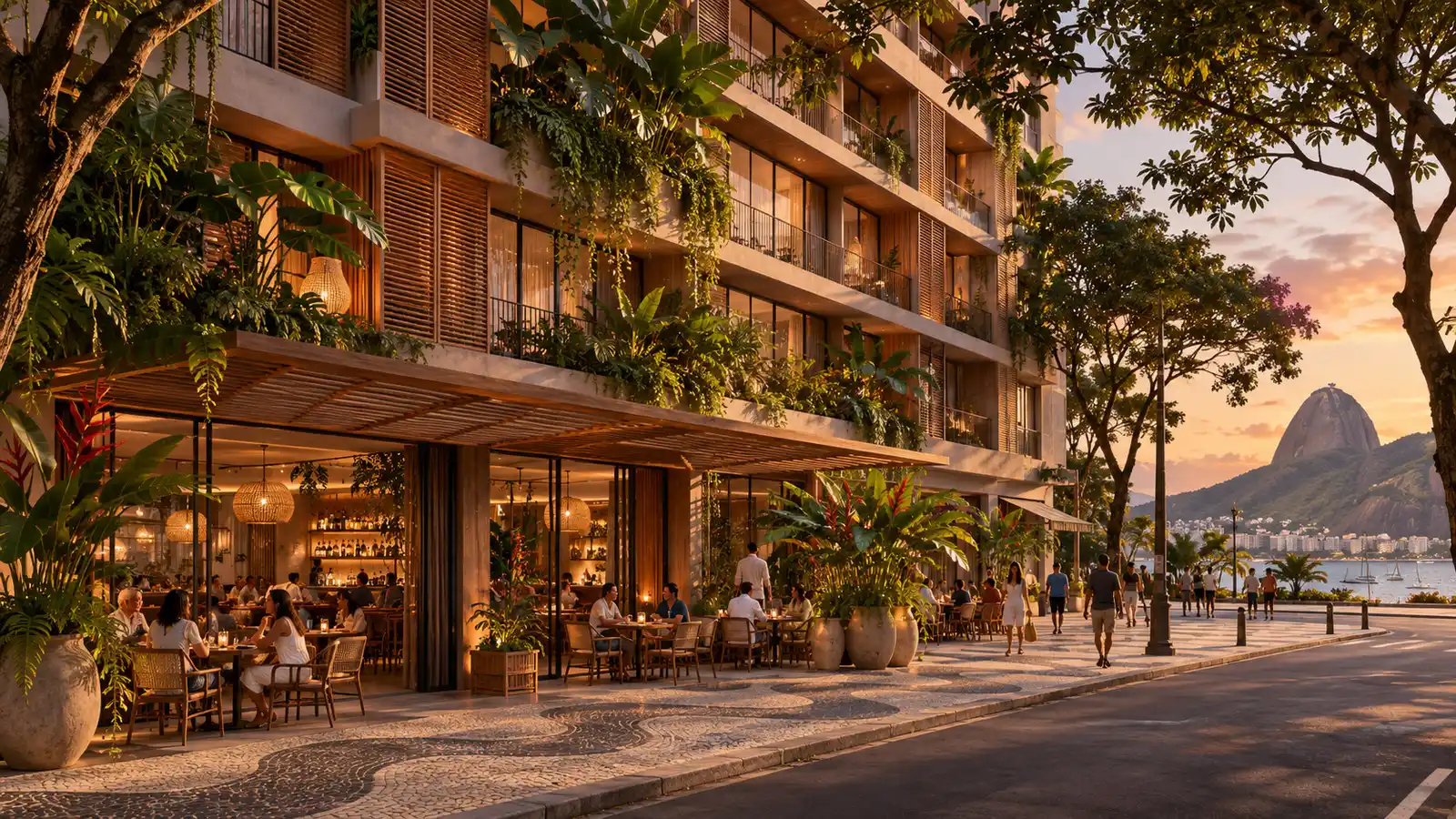
Urban
Inhabiting the city and its neighbourhoods.
A hotel integrated into urban life, gastronomy, public spaces and local habits.
Restaurants, cafés, terraces and meeting spaces give the address a living connection with its neighbourhood. Rooms and suites welcome business, cultural and personal stays.
Optional residential component: up to 40% of the total number of units, depending on the project.
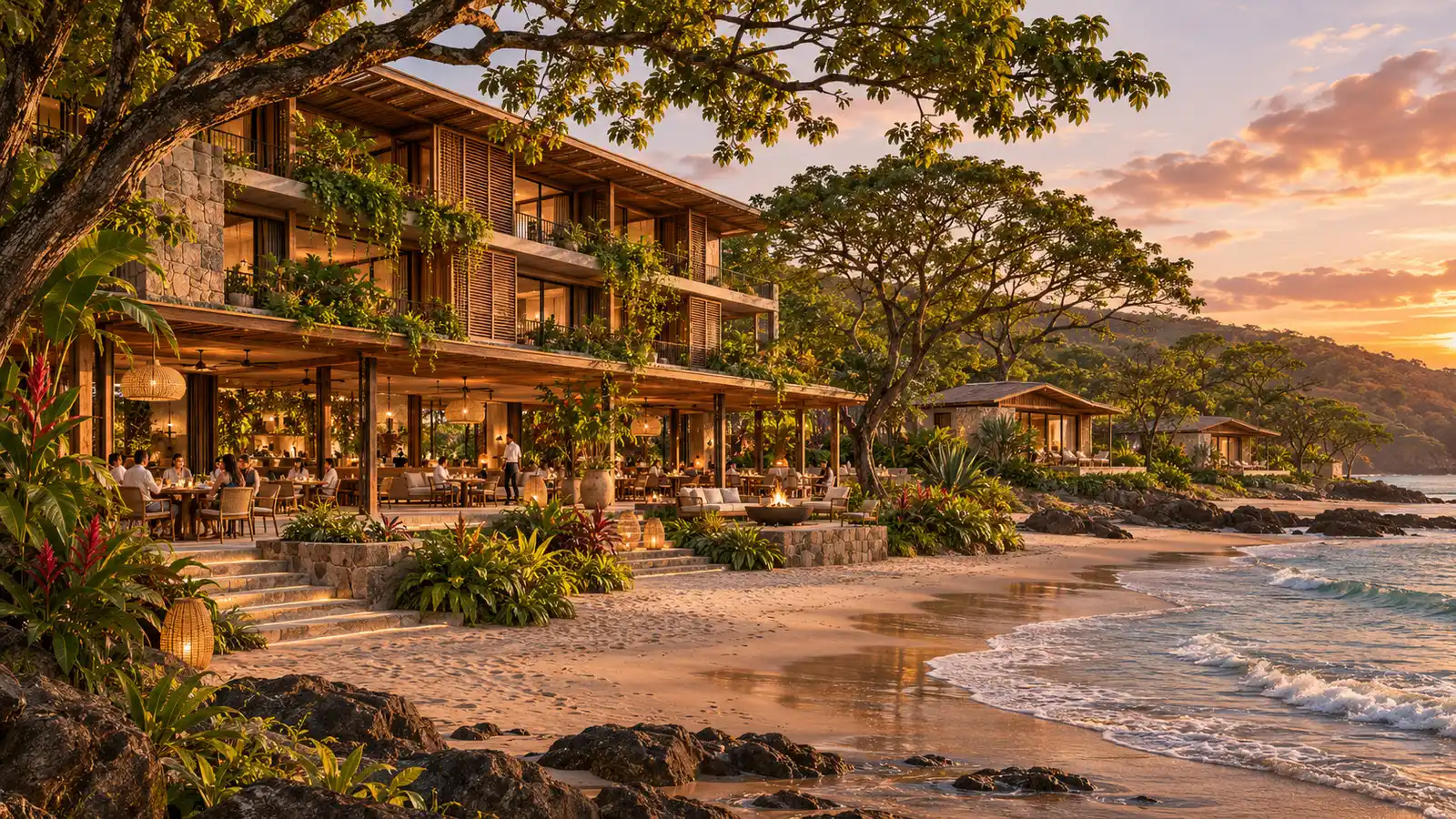
Coastal
The coast as a way of life.
A contemporary coastal hotel rooted in the climate, landscapes and ways of life of its shoreline.
Rooms, suites, dining spaces and terraces are organized around the coastal experience. Hospitality villas may complete the composition and extend the stay into the landscape.
Apartments and, depending on configuration, branded residential villas; up to 30% of all units.
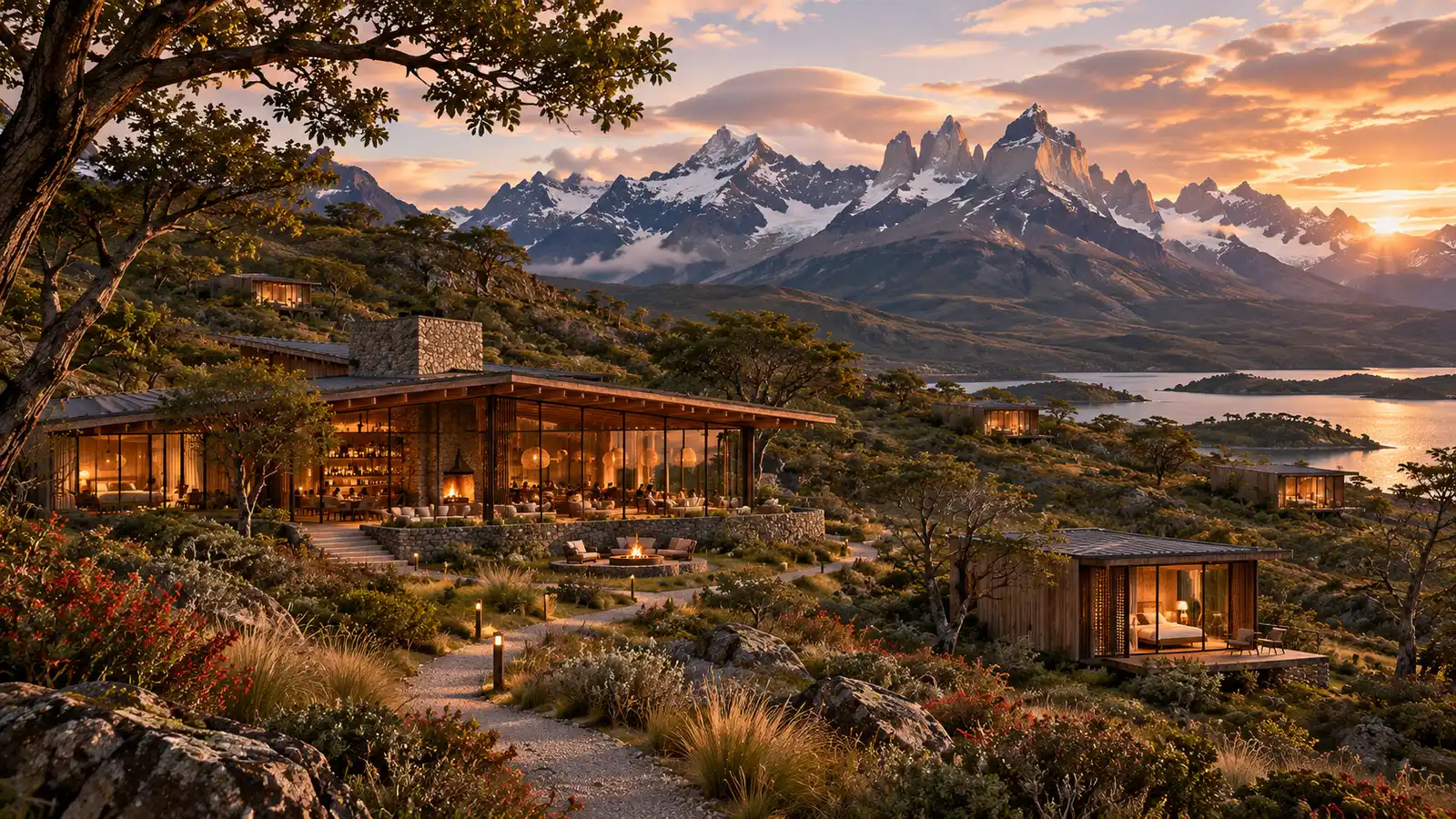
Landscape
Staying to the rhythm of the landscape.
A compact hotel hub houses shared facilities, surrounded by accommodation integrated into the territory.
Pavilions, suites and a few hospitality villas create an experience attentive to terrain, vegetation and climate. Shared spaces gather around the hotel hub.
Accommodation and shared spaces entirely dedicated to hospitality, adapted to the landscape.
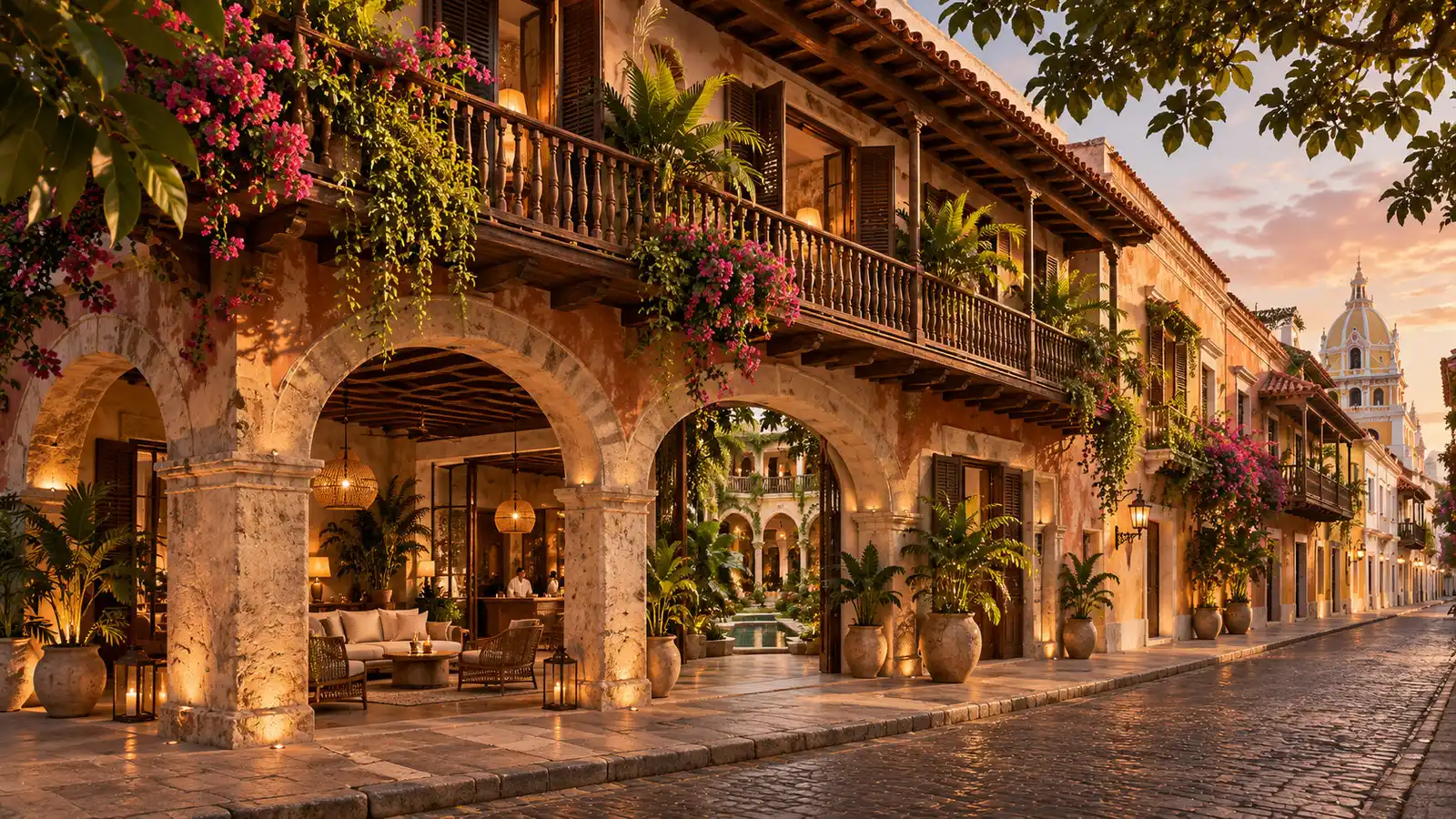
Heritage
Memory joins contemporary life.
The rehabilitation of a historic building or ensemble reveals a new hospitality destination.
Rooms, suites, courtyards and lounges draw their character from existing spaces. A secondary contemporary intervention can complement the heritage asset and operational functions.
A living heritage building whose architecture guides the programme and conversion.
Guesthouse
The art of hosting on a personal scale.
A guesthouse or small hotel ensemble develops an intimate relationship with its neighbourhood.
Rooms and suites open onto a courtyard, garden or shared lounges. Personalized welcome, appropriately scaled dining and domestic character define the experience.
A main house or compact hospitality-only ensemble integrated into neighbourhood life.
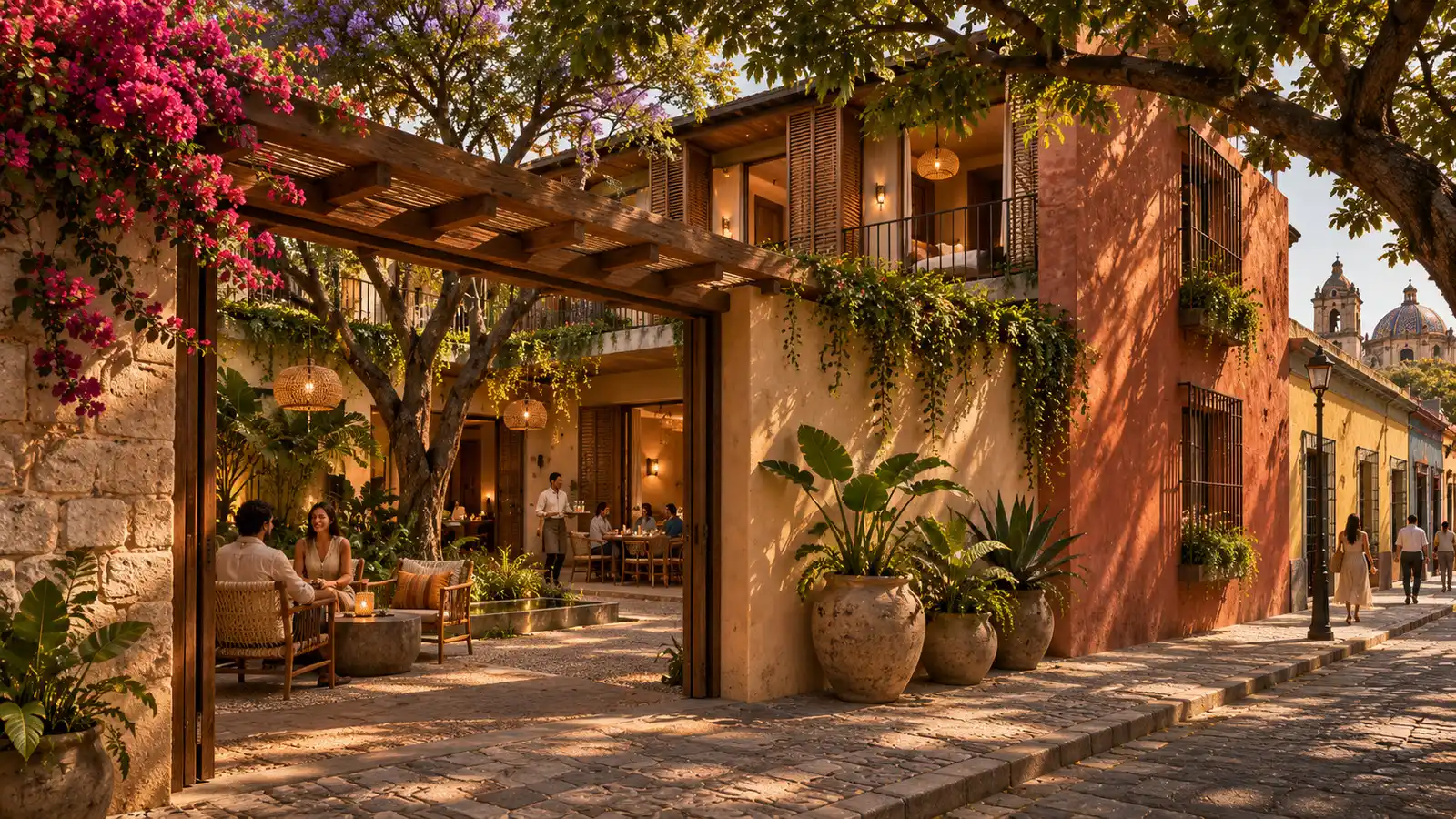
Mixed-Use
Several uses, one living address.
A hotel at the heart of an urban ensemble combining gastronomy, retail, culture and meeting spaces.
Different functions contribute to an active urban destination. Programming coordinates the hospitality experience, public flows, services and complementary uses.
Optional residential component: up to 50% of the total number of units, depending on configuration.
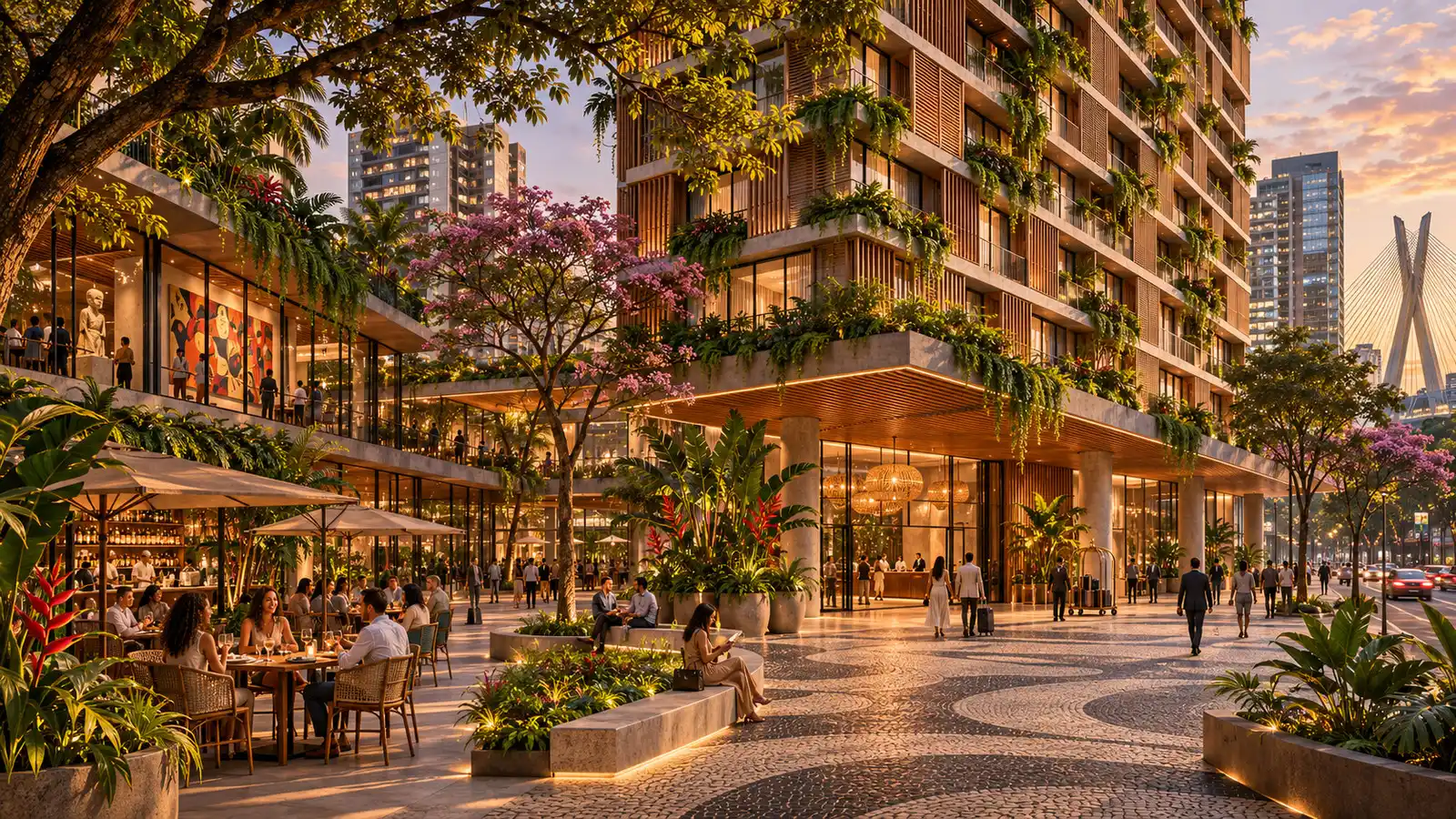
Winelands
Hospitality at the heart of the vineyard.
A hotel integrated into an actively productive wine estate, connected to its landscapes and activity.
The hotel house brings together shared functions and dining. A few suites within the vineyard extend the experience of wine culture and estate life.
Hospitality-only use within an active vineyard, with a territorial gastronomic identity.
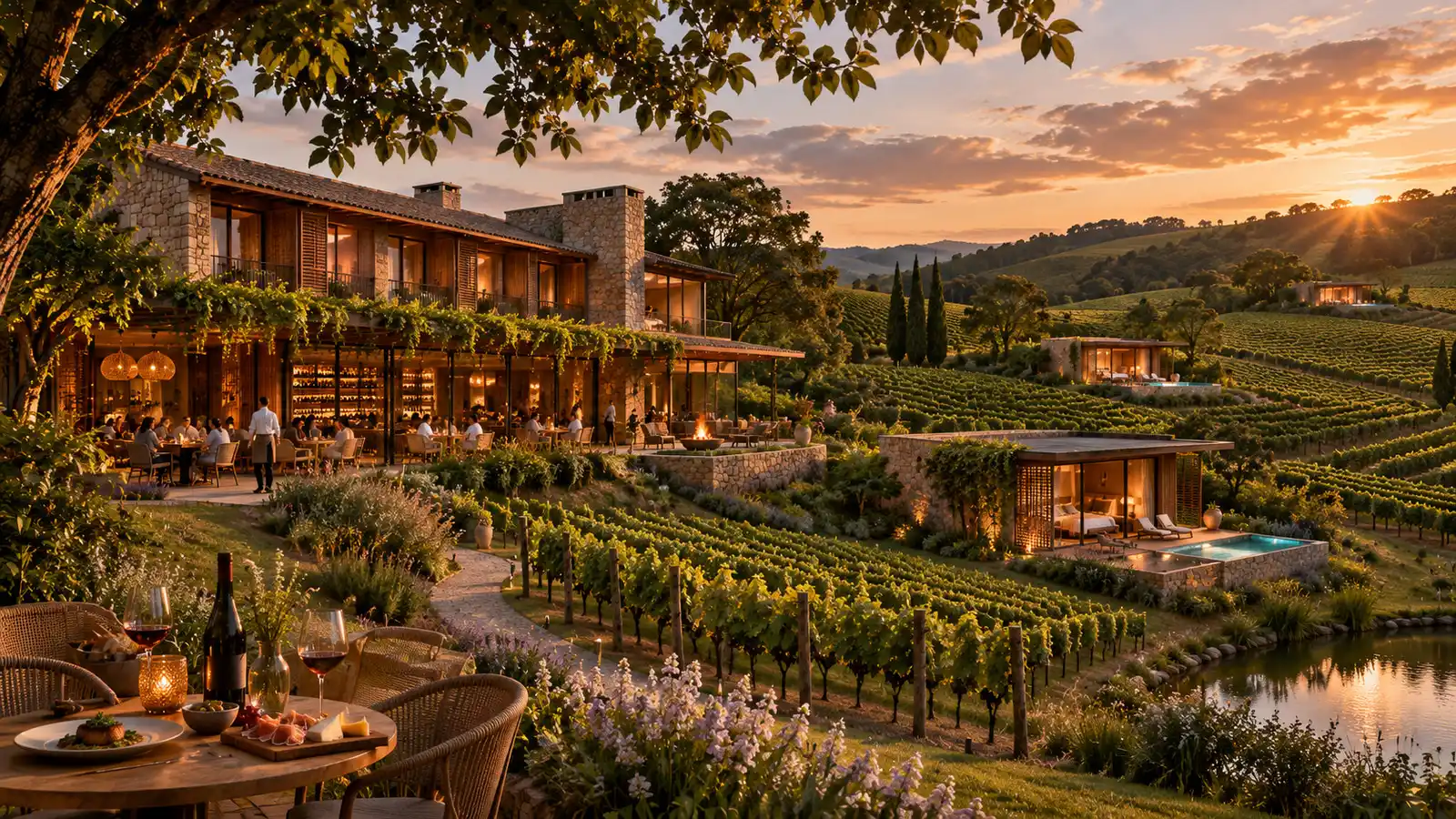
Engagement:
participating in the life of a place.
AYLLU expresses hospitality in tune with Latin America's actual rhythms, cultures, architecture and landscapes, allowing each territory to be experienced freely in its own way.
The experience starts with the territory
Cities, neighbourhoods, coasts, landscapes and heritage are the project's first sources. Each typology organizes a hospitality response to these characteristics.
Architecture, materials and open spaces accompany the social and climatic life of the place.
Hospitality as lived experience
Restaurants, cafés, courtyards, terraces and cultural spaces can become true gathering places shared with the surrounding community.
Rooms and suites provide privacy and comfort, while shared spaces open up opportunities for encounters, discovery and presence.
An already established hospitality system
before the real estate project
AYLLU connects seven territorial typologies with accommodation programmes, architectural and interior references, operating models and existing economic frameworks.
One site, one suitable typology
An urban plot, historic building, coastal site or wine estate is assessed against its territorial characteristics.
The selected typology guides capacity, programming and operational requirements.
Interconnected decisions
GHS references guide investors, developers, architects, engineers and operators around an already defined hospitality proposition.
Project design draws on local data, actual asset constraints and economic validation.
Assess the territory
Read the city, landscape or building in relation to the system.
Define the programme
Coordinate accommodation, shared functions, architecture and operations.
Develop and validate
Coordinate programming, investment, operations and governance.
Real estate
and economic implications.
Land and buildings
The typology allows a site, neighbourhood or existing asset to be assessed using an already defined hospitality proposition.
Programme and CAPEX
Capacity, shared spaces, networks, climate-responsive design and facilities structure investment according to the typology.
Operations and OPEX
Circulation, maintenance, kitchens, logistics, services and back-of-house functions guide costs and operational organization.
Gastronomy and revenues
Restaurants, cafés and spaces used by local residents extend the hotel's commercial value and distinct appeal.
Branded residences
Urban, Coastal and Mixed-Use may include an optional residential component, sized according to configuration.
Continuity of decisions
Identity and references established in advance facilitate the coordination of studies, financing and development.
Institutional architecture
precedes construction.
AYLLU has a professional corpus linking its territorial expressions to a method for design, operations and development.
Founding identity
The Condition of Life of Engagement and the hospitality doctrine unifying Latin American expressions.
Typologies and programmes
Seven typologies in this edition, accommodation categories and real estate composition frameworks.
Territory and selection
Land and heritage assessment references, territorial criteria and deployment.
Architecture and interiors
Area schedules, climate principles, accommodation design and shared spaces.
Governance and operations
Control, validation, operator compatibility and service organization references.
Economics and development
Financial frameworks, CAPEX and OPEX references and models to be refined for a real project.